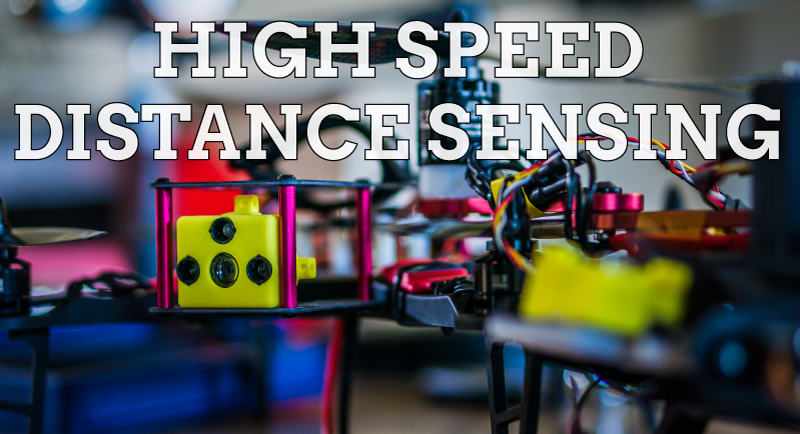
Our TeraRanger sensors use infrared light for their active signal emission which travels at 300 000 000 m/s and is much faster than the sound waves of ultrasonic sensors (≈ 340 m/s). This allows our sensor systems to work with reading frequencies of up to 1000 readings per second. Ultrasonic sensors are physically bound to refresh rates of about 10 Hz, and laser systems for robotics usually operate at around 100 Hz in non eye-safety conditions and around 40 Hz, in areas where eye-safety is required. They are therefore inadequate for high performance robotics or multi-sensor environments. Where sensors are triggered sequentially to avoid crosstalk.
Important for:

TeraRanger sensors have a very high detection sensitivity that allows them to reach long range targets of up to 14 meters indoors and at least 6 meters outdoors, just using low-power infrared light from LEDs. Previously, such distances were only possible with high-powered and non eye-safe laser beams.
Important for:
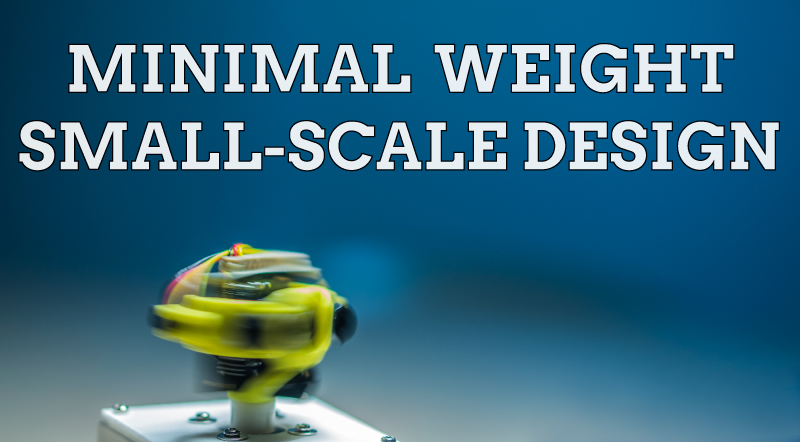
Infrared ToF is unbeatable when it comes to performance relative to weight. In contrast to traditional laser-based range finding solutions. Infrared ToF does not require heavy hardware. For instance, the TeraRanger One weighs only 8 grams, which is at least three times less in weight and volume than current state-of-the-art laser-based range finding solutions.
Important for:
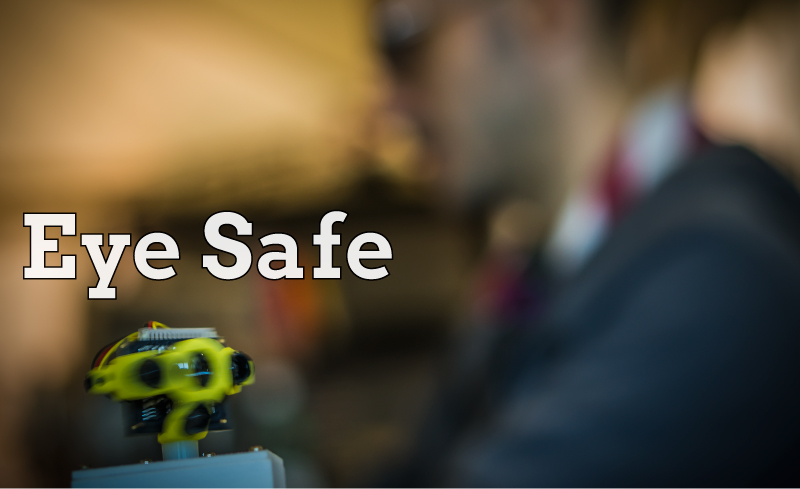
TeraRanger sensors remain eye-safe by physical design, independent of software and hardware health-state. This is due to the very low power levels that our sensors use when emitting signals through LEDs. With our sensors, eye-safety no longer needs to be taken into consideration, when designing new robotic systems. As a result, high-performance robotic applications can now take place in close proximity to people as.
Important for:
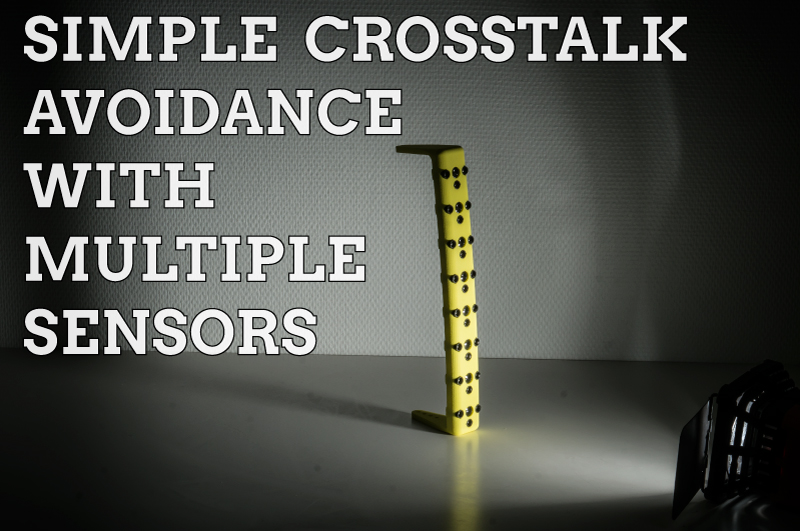
Our sensor systems work with reading frequencies far above any of our competitors. This makes it possible to trigger multiple sensors sequentially in order to avoid the common problem of interfering signals (i.e. crosstalk). Even with asynchronous triggering, using TeraRanger arrays is still significantly faster than using other technologies. That is why CERN has chosen us for their “virtual safety barriers” in the tunnel of the Large Hadron Collider.
Important for:
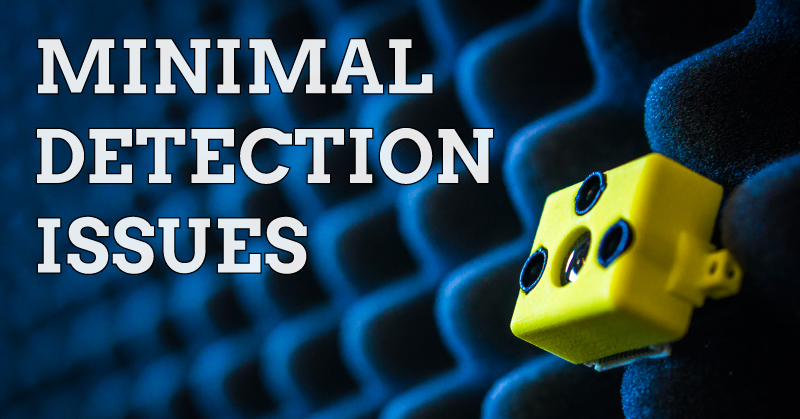
Our light-based Time-of-Flight technology is far more reliable than ultrasonic technology and provides reliable, accurate results in almost any environment. Particularly indoors, sound waves are often reflected off by hard surfaces or absorbed by soft surfaces. The corresponding echoes, or loss of signal, make ultrasonics unreliable, and in many cases, totally unsuitable.
Important for:
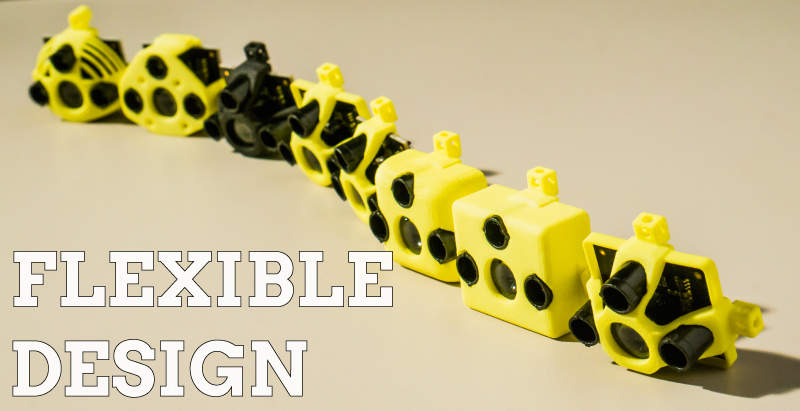
Our Time-of-Flight sensors are easily adaptable to meet specific customer requirements. Our modular design allows us to easily change shapes and colours and to make arrays or matrices of sensors. And of course, we have the knowledge to adapt our sensors to your precise needs. Whether this is increasing the range, the field-of-view, or creating a fully bespoke solution. We are committed to working with you to reach the best solution to your needs.
With careful engineering and clever use of technology we have managed to produce fast, efficient Time-of-Flight technology at the lowest possible cost. We can achieve performance close to that of a laser, but at a far lower cost and in a smaller, lighter and more efficient eye-safe package. As a result our technology is not only ideal for industrial applications, but also for research labs, universities or home-based innovators with constrained budgets.

TeraRanger sensors as really simple to use: they stream distance values as digital numbers in millimetres. The values are pre-calibrated from us. The sensor adapts automatically to the changing environment, even if temperature or light conditions change. It really is plug & play. There is no need to concern yourself with the sensor; you simply focus on writing the code for your robot.